
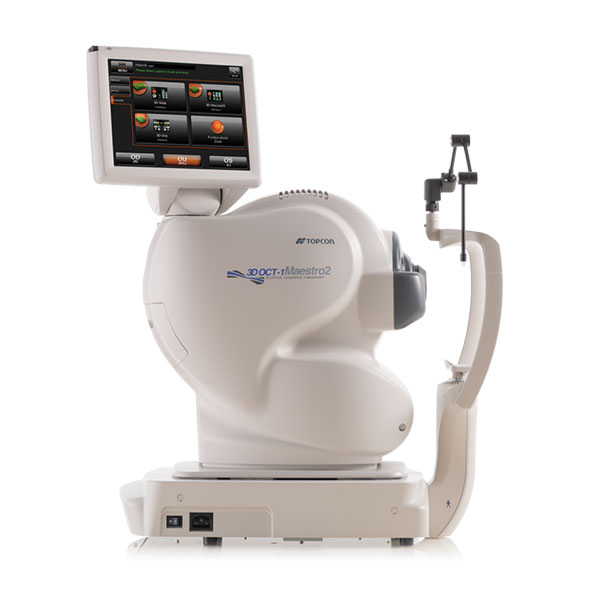
Optical Coherence Tomography (OCT) is a non-invasive imaging test that captures detailed cross-sectional images of the retina and optic nerve. By allowing your optometrist to see what’s happening beneath the surface of the eye, OCT helps detect subtle changes.
What Is Optical Coherence Tomography (OCT)?
Optical Coherence Tomography is an advanced diagnostic imaging test that produces high-resolution cross-sectional images of the layers of your retina. The retina is the light-sensitive tissue at the back of the eye that plays a crucial role in vision. An OCT scan allows your optometrist to visualize and measure the thickness of these retinal layers with exceptional precision.
Why Is OCT Imaging Important?
OCT imaging provides detailed information that cannot be seen during a standard eye exam. By revealing changes beneath the surface of the eye, OCT helps your optometrist detect early signs of eye disease, monitor progression, and evaluate how well treatments are working.
Regular OCT scans allow your doctor to compare images over time, making it easier to identify subtle changes that may occur gradually. This is especially important for managing long-term or progressive eye conditions.
What Eye Conditions Can OCT Help Detect or Monitor?
OCT is commonly used when your optometrist needs a detailed view of the retina or optic nerve. It may be recommended for patients with:
- Glaucoma or suspected glaucoma
- Macular conditions
- Retinal disorders
- Optic nerve abnormalities
- Unexplained vision changes
What Happens During an OCT Scan?
An OCT scan is quick, painless, and completely non-invasive. During the test, you will sit comfortably in front of the imaging device and be asked to focus on a target while the images are captured.
The scan takes only a few seconds per eye and does not involve any contact with the eye. No recovery time is needed, and the test can easily be performed as part of a comprehensive eye exam.
How OCT Supports Long-Term Eye Care
OCT imaging allows your optometrist to monitor structural changes in the retina and optic nerve over time. By comparing scans from different visits, your doctor can determine whether a condition is stable or progressing and adjust care plans accordingly.
Visit Dr. Sam Dhaliwal & Associates
Need an OCT scan? Visit the clinic location nearest to you. If you have questions about Optical Coherence Tomography or have been advised that this test may be beneficial, our team is happy to discuss it.
Optical Coherence Tomography (OCT) FAQs
What is an OCT scan used for?
An OCT scan is used to capture detailed images of the retina and optic nerve. It helps optometrists detect eye diseases, monitor structural changes, and track progression over time.
Why would my optometrist recommend an OCT scan?
Your optometrist may recommend OCT if you are being monitored for glaucoma, have retinal or optic nerve concerns, or are experiencing vision changes that require a closer look beneath the surface of the eye.
Is an OCT scan necessary if I already had an eye exam?
In some cases, yes. While a comprehensive eye exam evaluates overall eye health and vision, OCT provides detailed imaging of retinal and optic nerve layers that cannot be seen with standard testing alone.
Is Optical Coherence Tomography painful?
No. OCT is painless and non-invasive. The test does not touch your eye and is comfortable for patients of all ages.
How long does an OCT scan take?
The scan itself takes only a few seconds per eye. Including setup, the entire process usually adds just a few minutes to your appointment.
How often do OCT scans need to be done?
Patients being monitored for conditions such as glaucoma or retinal disease may have OCT scans performed regularly to track changes over time.